.png)
Transforming Footfall Data into Actionable Insights
Updated: Mar 21
Understanding the Importance of Retail Footfall Analytics
Accurate footfall is the foundation of every operational decision. But raw data alone isn’t enough. The real value lies in transforming simple counts into retail footfall analytics that drive revenue, staff optimization, and compliance.
Once a retail people counter captures data at an entrance, the focus shifts to the cloud-based dashboard and people counting software. Integrating this data into a comprehensive people counting system ensures that raw numbers become actionable insights. This is where numbers turn into real-time intelligence.
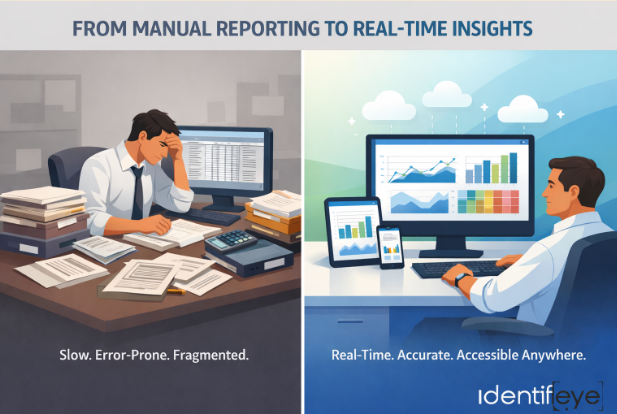
This is where people counting becomes people counting analytics.
Below is how raw footfall data is converted into actionable retail footfall analytics using a real-time dashboard.
1. Retail Analytics Dashboard: See Operations Clearly
Upon logging in, the dashboard eliminates operational blind spots by instantly displaying a high-level performance overview. Instead of sifting through raw logs, you get immediate access to actionable retail footfall analytics and clarity on:
Total store traffic for a selected period
Comparisons with previous weeks or months
Overall traffic trends
Peak traffic hours
Why it matters: You get a quick sense of performance without needing to analyze complex spreadsheets.
2. Stop Guessing: Visualize Peak Store Traffic Patterns
People counting analytics allow you to visualize traffic across specific timeframes. The dashboard breaks down:
Hour-by-hour traffic patterns
Daily or weekly trends
Exact identification of peak and low-traffic windows
Why it matters: This helps you understand when traffic occurs, not just how much, enabling you to optimize staff scheduling to reduce leakage and improve labor efficiency.
3. Footfall to Finance: Optimizing Sales Conversion Rates
Store traffic without context is just a number. By viewing traffic data alongside transactions or bills, you gain clear visibility into essential retail store performance metrics. This is where a standard customer counter evolves into a complete retail visitor counting system. The dashboard allows you to track:
Sales conversion rates (Sales-per-visitor)
Performance changes over time
Trends in consumer behavior in the retail industry
Why it matters: This makes it easier to assess whether incoming traffic is translating into meaningful revenue—or if you are missing opportunities.
4. Multi-Location Intelligence: Standardizing Store Performance
For enterprises with multiple locations, the dashboard serves as a central intelligence layer. It allows for:
Side-by-side store comparisons
Performance ranking across locations
City or region-level summaries
Why it matters: You can identify which stores are underperforming under similar conditions and standardize execution across the board.
5. Precision Analysis: Filtering Door Traffic Data
Web-based dashboards include powerful filters that allow you to refine what you see, ensuring you aren't just looking at broad averages. You can isolate data by:
Custom date ranges
Specific time windows (e.g., peak hours only)
Individual stores or specific retail door traffic counters
Why it matters: Analysis reflects actual operating conditions, giving you the precision needed to fix compliance gaps before they become losses.
6. From Insights to ROI: Actioning Retail Footfall Data
The dashboard is not just a reporting tool; it is a decision engine. Insights drawn from retail footfall analytics support critical actions such as:
Adjusting staffing during busy periods to meet demand
Identifying congestion or bottlenecks in store layout
Tracking performance trends to validate marketing efforts
Evaluating whether increased traffic is actually improving ROI
7. The Future of Retail Analytics: Embracing Technology
As technology evolves, so does the potential for retail analytics. Incorporating advanced tools like AI and machine learning can enhance data analysis. This allows retailers to predict trends and make proactive decisions.
Conclusion: Data You Can Trust, Decisions You Can Act On
Using a people counting machine answers the basic question: “How many entered?” But a robust dashboard answers the questions that actually drive profit:
“When does traffic peak? How does it relate to sales? Which locations are winning?”
Without analysis and visualization, people-count data remains limited. With a cloud-based dashboard, you replace guesswork with retail intelligence that stays within reach—accessible securely from any desktop, laptop, or mobile.

Stop Guessing — Start Measuring.
To see your real-time data in action.


Comments